Posts

What's your idea?

Image
Recently on LinkedIn I came across this article and thought of my blog. Maybe its just an ideal but this is what I wish for Freeport ... to be able to come alive without Government or the Grand Bahama Port Authority, but just people/residents who are there with ideas and take on the united project of “Rediscovering Freeport”. The article said: "On January 8, 1966, the  New Yorker profiled Buckminster Fuller  for the first time. During a trip to a Maine island with the journalist Calvin Tomkins, Fuller said something tremendously prescient: - Fuller proposed a worldwide technological revolution...[that] would take place quite independently of politics or ideology; it would be carried out by what he calls "comprehensive designers" who would coordinate resources and technology on a world scale for the benefit of all mankind, and would constantly anticipate future needs while they found ever-better ways of providing more and more from less and less.” Just as technology ...
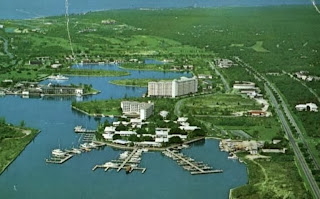
Concessions soon to end in the Hawksbill Creek Agreement

So we have looked at the “Bend or Break” speech, checked out it results, (a quasi order for Bahamians to become unequal business partners) and the fall out from all of it. We have also looked at the actual Hawksbill Creek Agreement. I can say for the most part the Port Authority has lived up to its part on the bargain for most of the agreement. For some they may not have done so as a body, but they were intricate in “causing” such things to be done. We have the deep water harbour and commerce that arrived including the industrial businesses in the “Port” area. However, there were three portions of the agreement that are being debated even now and are up for review. The bottomline on the part of promises from the part of the Port Authority were met as promised. The promises by the Government by and large were met, but there were concessions that ran out in 1992, and were prolonged to 1993 when some amendments were made to the agreement. This time, the Port Author...

A pictorial look at Freeport 1950-1960s

Image
Before hitting the great days of the 70s and 80s I found these photos of Freeport on Oldbahamas.com and thought to share them. Remember that unlike Nassau, New Providence, Freeport, Grand Bahama did not have the history. What history we have now is the growing up of Freeport and the entire island due to the formation of the Hawksbill Creek Agreement,  the Grand Bahama Port Authority and the Grand Bahama Development Company. A boom of energy and a vision that was all set, but later side tracked by the thought of sharing the profits was what we were left with and little though of how to recover and move on with proper legislation to assist all. Next week we look at the promises fulfilled by the G.B. Port Authority. Thanks again to Oldbahama.com. If you want copies of these photos just contact them for reprints.

The Hawksbill Creek Agreement

There is been much said about the formation of Freeport and the Hawksbill Creek Agreement, but today I want to look specifically at the Agreement itself. This Agreement signed August 5th 1955, was designed to make a “free port” that would encourage foreign investors to come to Grand Bahama Island through a variety of tax exemptions. It was signed between the Government of The Bahamas and the Grand Bahama Port Authority, which was a private company founded by Virginian financier Wallace Groves. The Agreement granted the Port, as it is called, the first 50,000 of crown land with exclusive rights to develop. In return, the Port Authority was required to dredge a deepwater harbour, construct an airport, hospitals and schools and provide other services and amenities. Later the Port acquired additional land from the crown and from private sources, giving it a total of 150,000 acres or 233 square miles for development. Through the years that have been a lot of dispute over how the i...

50/50

Image
Apologies to my readers for not bringing you the promised speech but I have not found the speech just yet in my collection of speeches but as soon as I do you will have it. In the mean time, there is something of great interest that came up and that was the information on why investors did leave. Following the "Bend or Break" speech, a new unwritten law was to come that would try to equalize the playing field for Bahamians of all colour, but at a great expense to investors. It was said that business would be approved if they had Bahamian partners who were 50/50 without the Bahamian putting anything into the business but being able to have 50% of the profits. This was the beginning of what was called "Bahamianization" and continued to say that all positions held by foreigners were to be held by foreigners for a limited about of time, while they trained a Bahamian to take over. While this theory was said to have been great for Bahamians, for persons bringing...

Response by others to speech

Image
After reading the "Bend or Break" Speech I have had two responses that made me really wonder. The first said that Mr. Pindling was wrong to give such a speech.  "But that is not what destroyed Freeport. The Hawksbill Creek Agreement is the finest development agreement every written, in my view. However, after Wallace Groves, a lack of imagination and skills, together with a relatively low bar of the concept of "success" the owners of the Port concession set about milking the local population.  "If the Hawksbill Creek Agreement was being run right, Freeporters would pay nothing for Business License Fees; the profits from utilities would have been used to promote Freeport. Look at what Andrew Young Jr. did for Atlanta, that what Freeport lost with the aid of both political parties!" Very interesting concept, especially considering that to this day the Grand Bahama Port Authority says the stagnation of Freeport came because of the speech. Anothe...

After the "Bend or Break" Speech

After the "Bend or Break" Speech Following the famous or infamous "Bend or Break" speech by the then Premier and later first Prime Minister of The Bahamas, Sir Lynden O Pindling, there was a lot of movement in Grand Bahama and Freeport in particular. It is said that the Sir Lynden knocked down the gates the bounded Freeport from the East and the West allowing "dark" Bahamians to travel in and out of Freeport not only during the day time, but also during the evening. A number foreign investors then decided to leave the island and the country. Some without closing businesses or selling. What was left was the hope of a flourishing Freeport continuing at a sluggard pace. This pace through the years seemed to have dropped off but the "hope" of the Magic City, still persisted. In the 1980's there are a number of persons who are still very, very hopeful and even came up with papers on how we can better this island and the economy here. ...